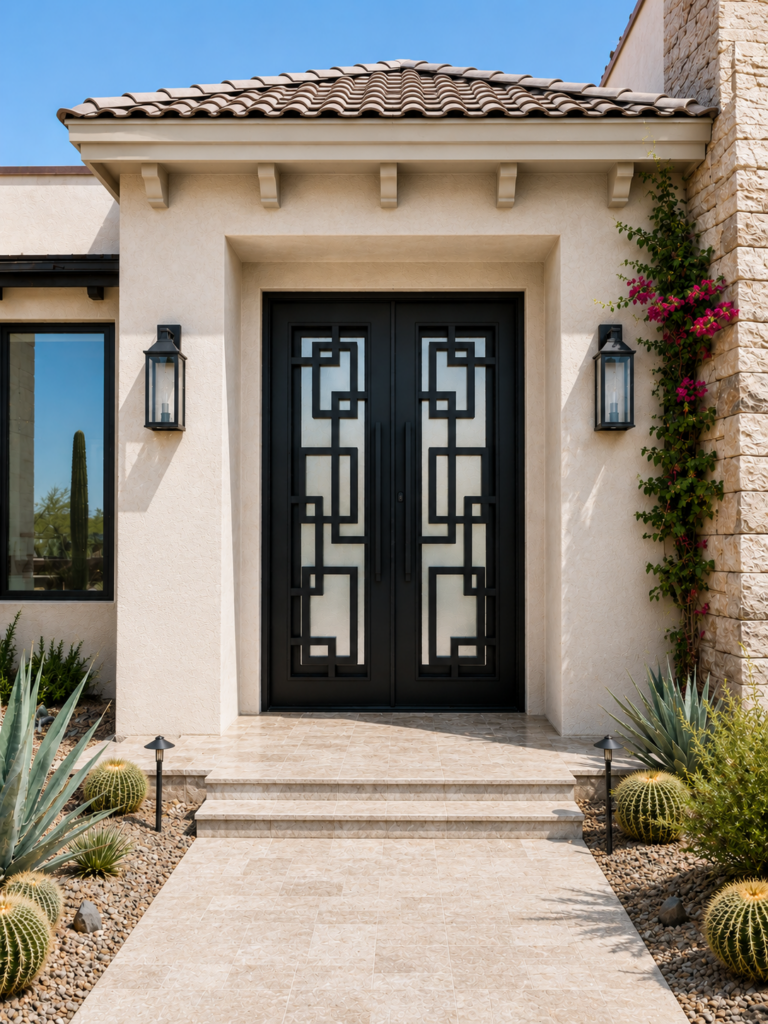
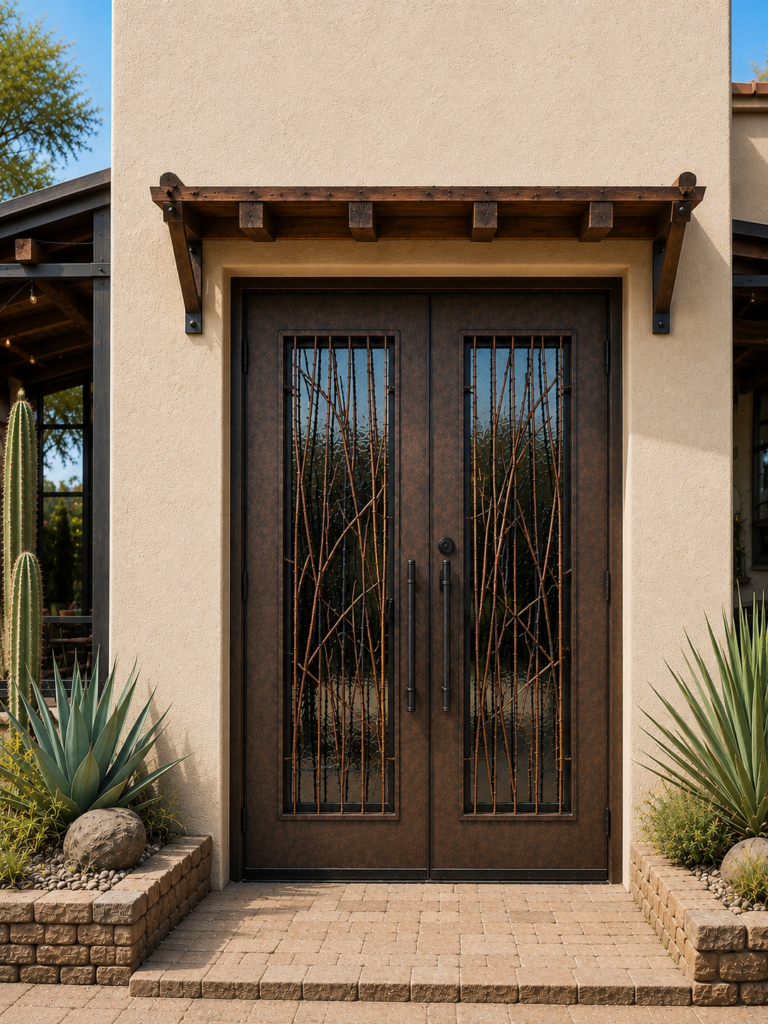
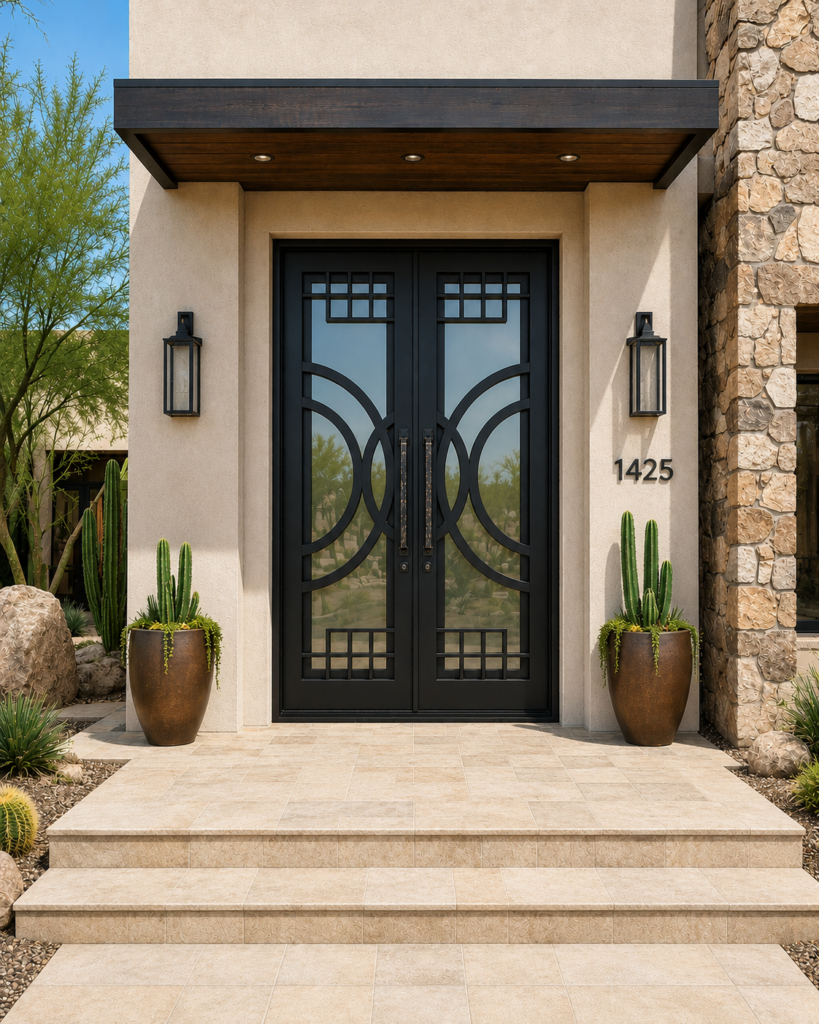
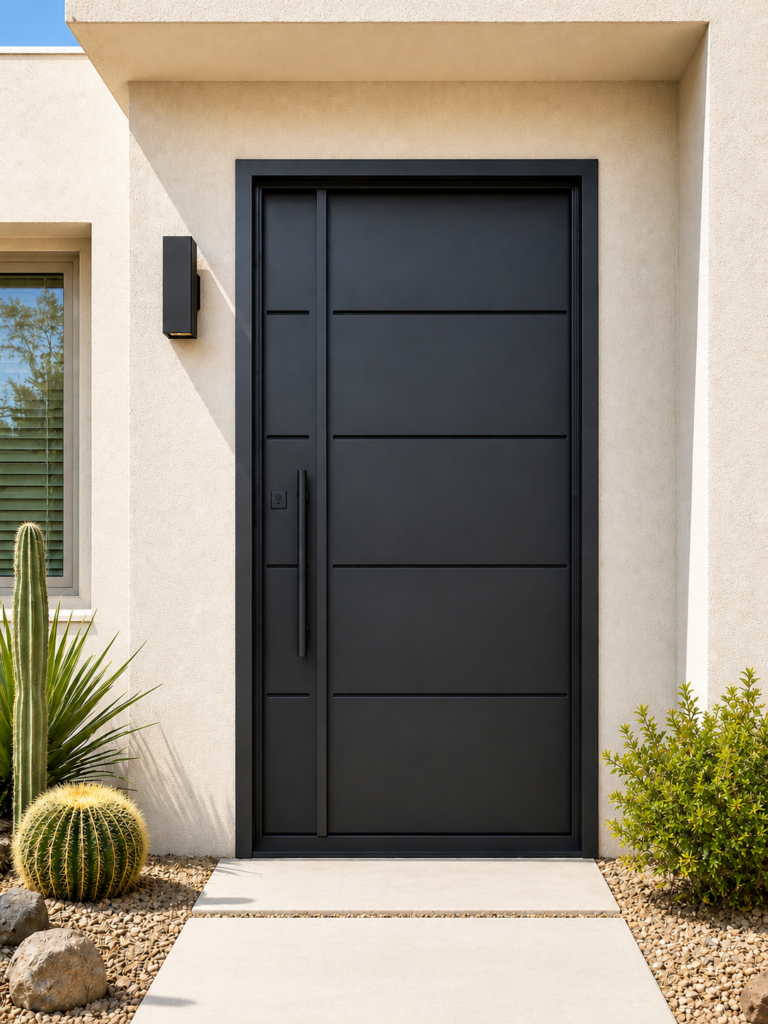
| Aspect | Custom Iron / Forged Steel | Standard Stamped Steel | Fiberglass | Natural Wood |
|---|
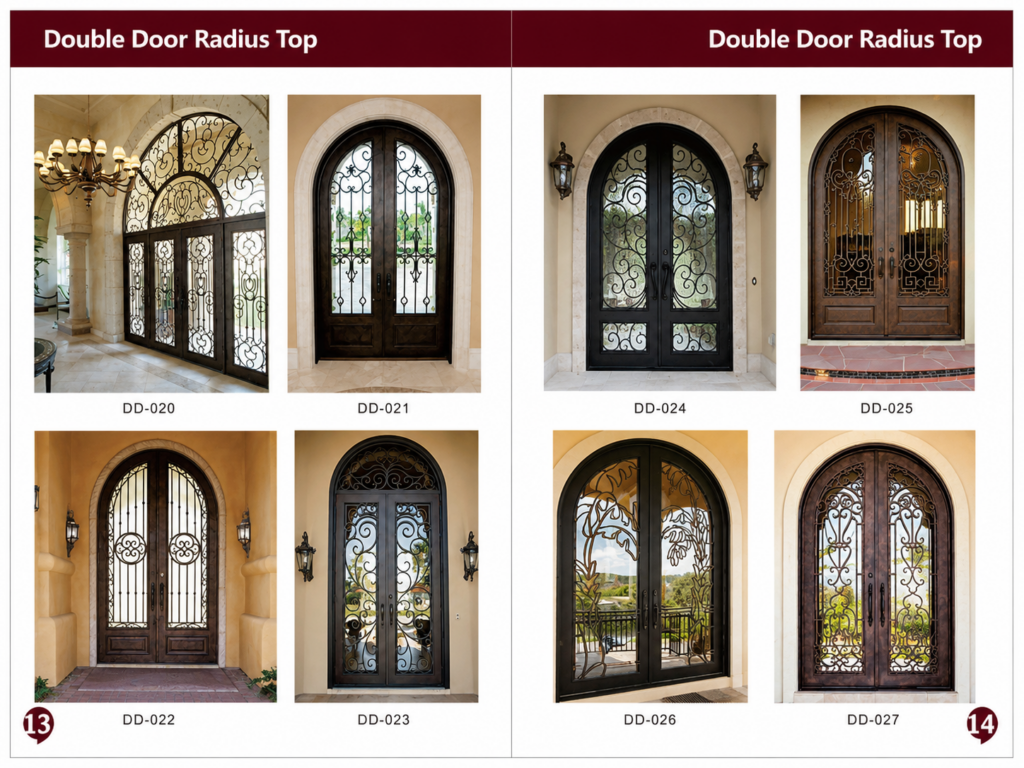
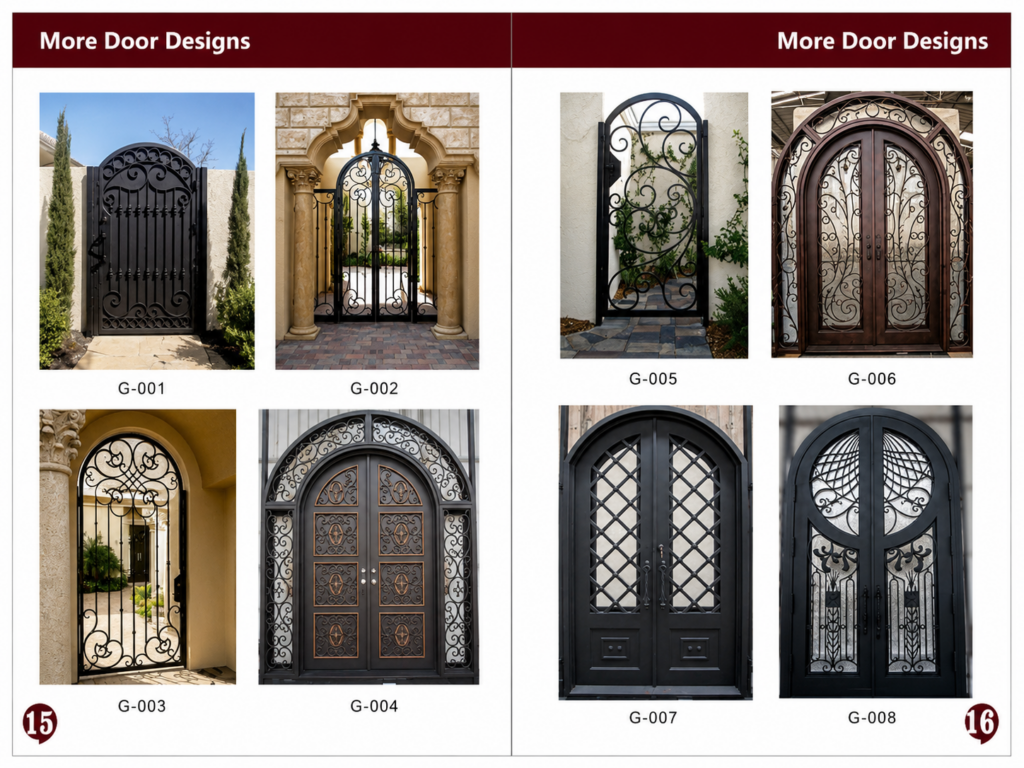
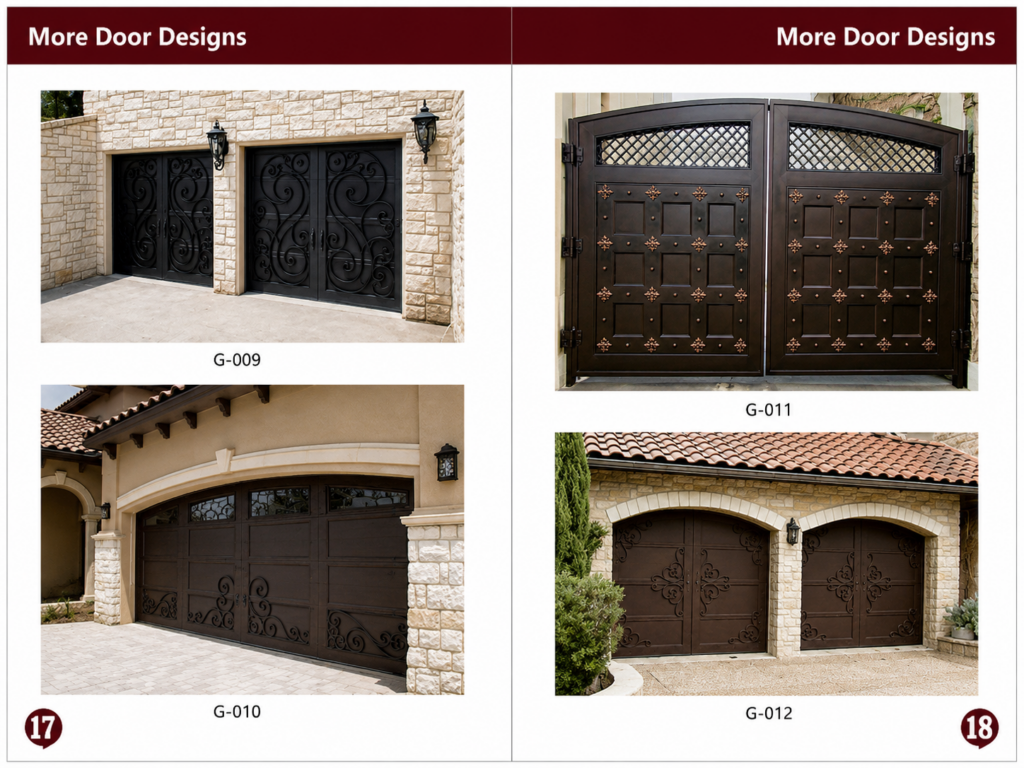
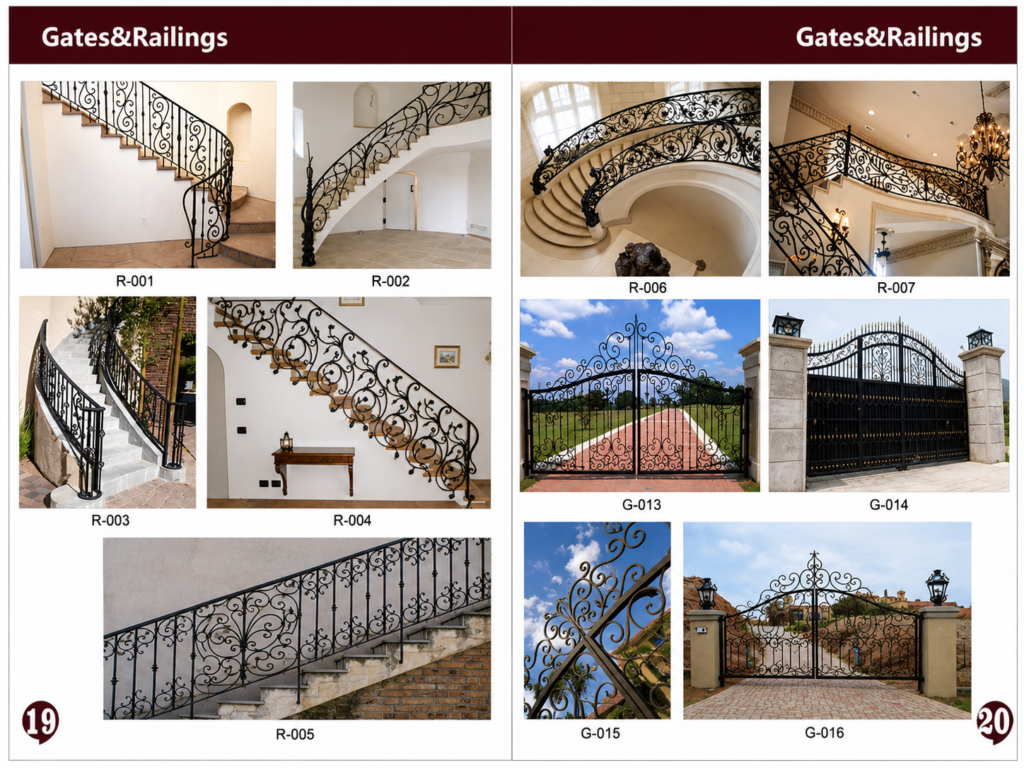
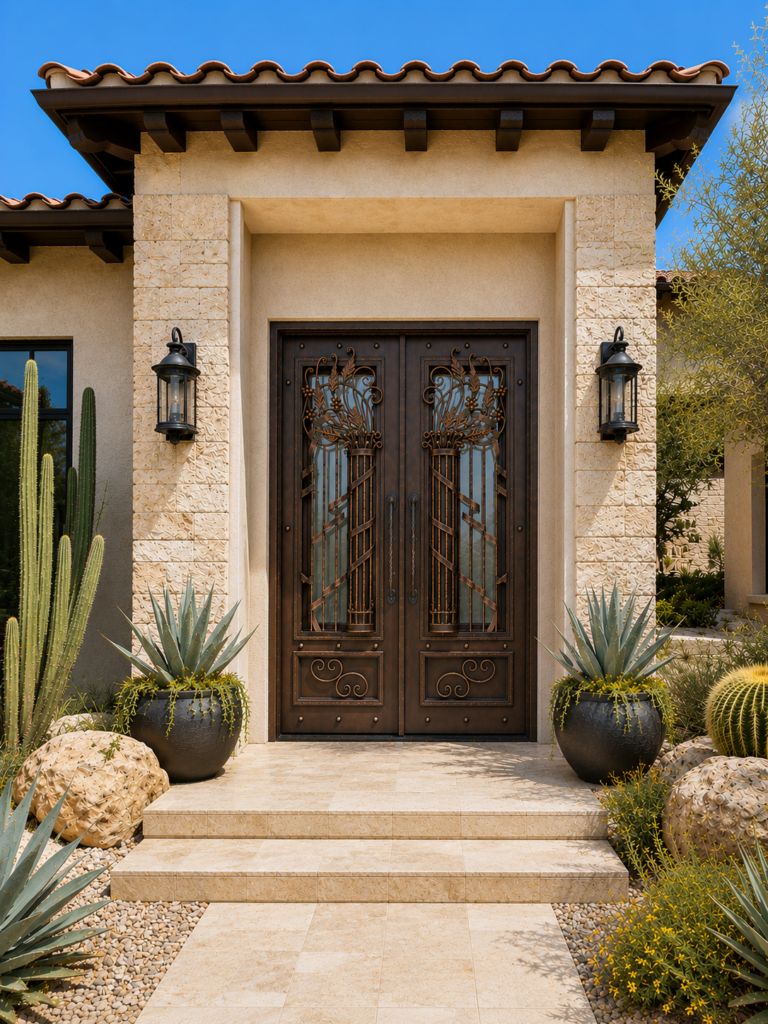
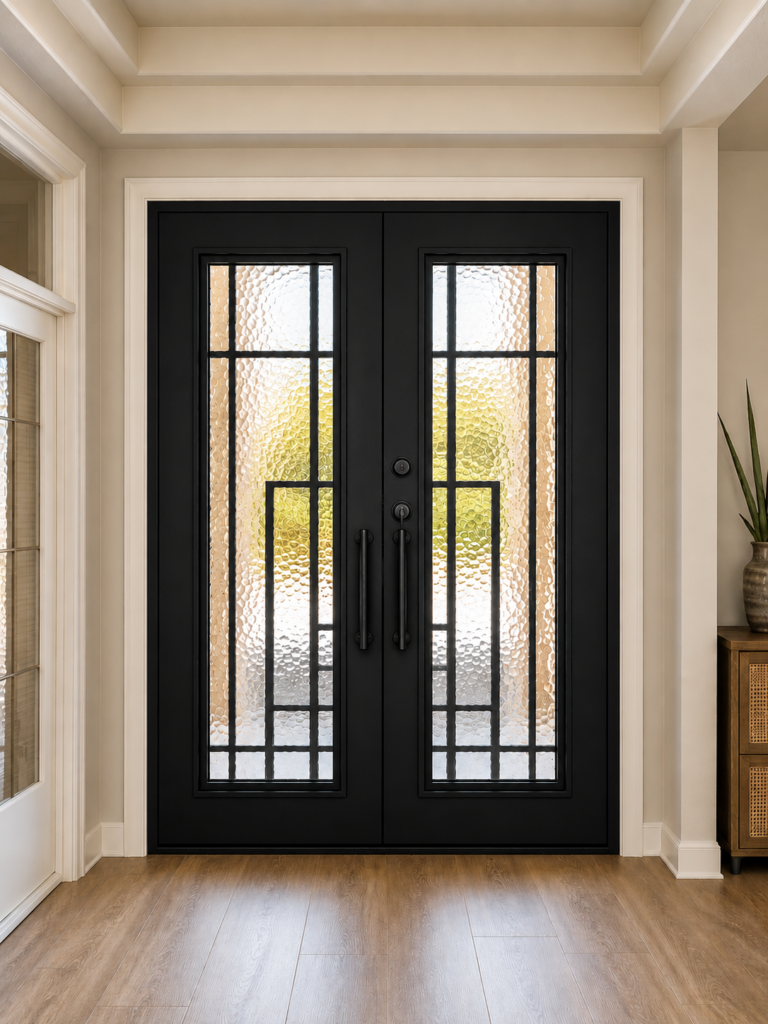
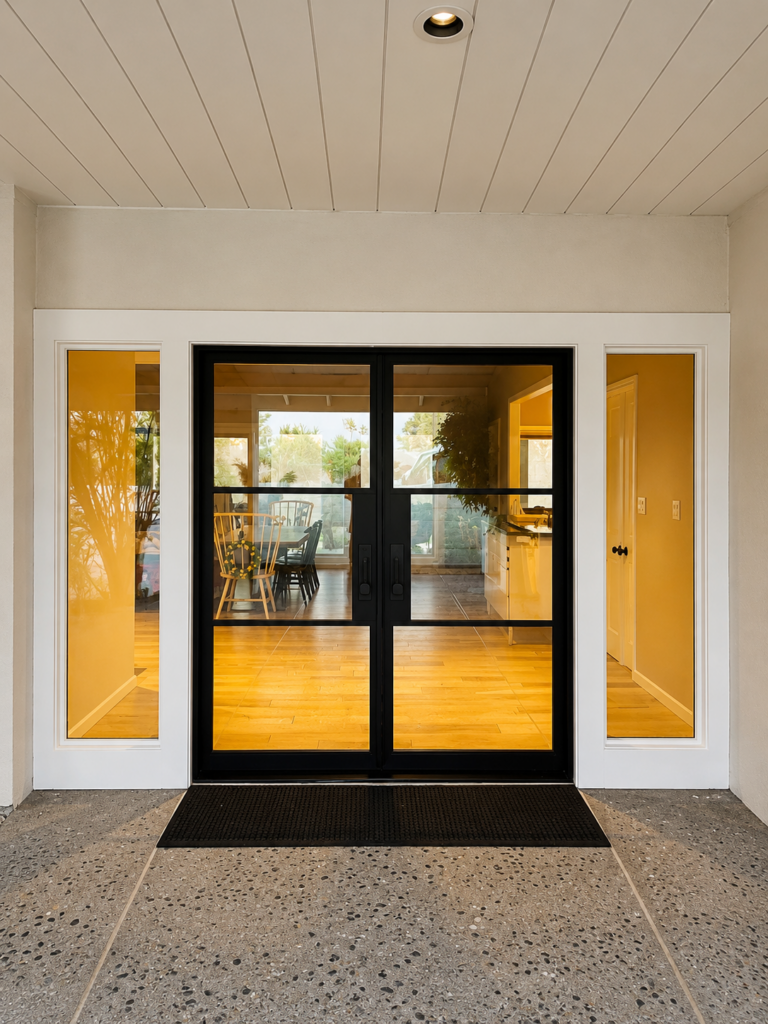
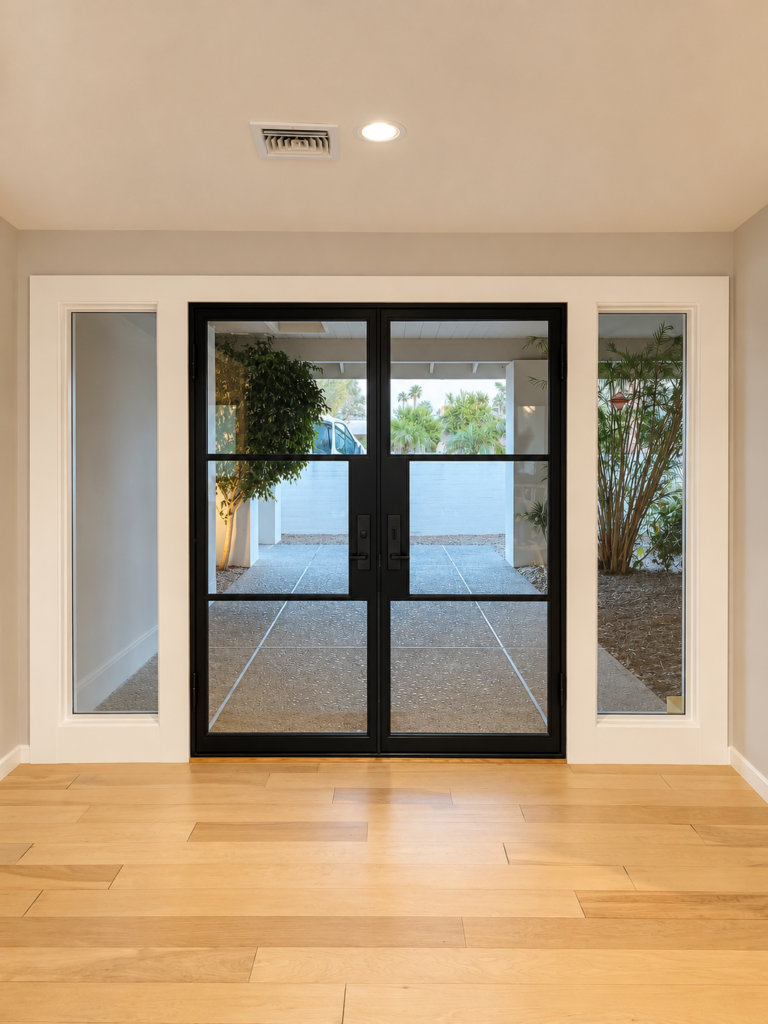
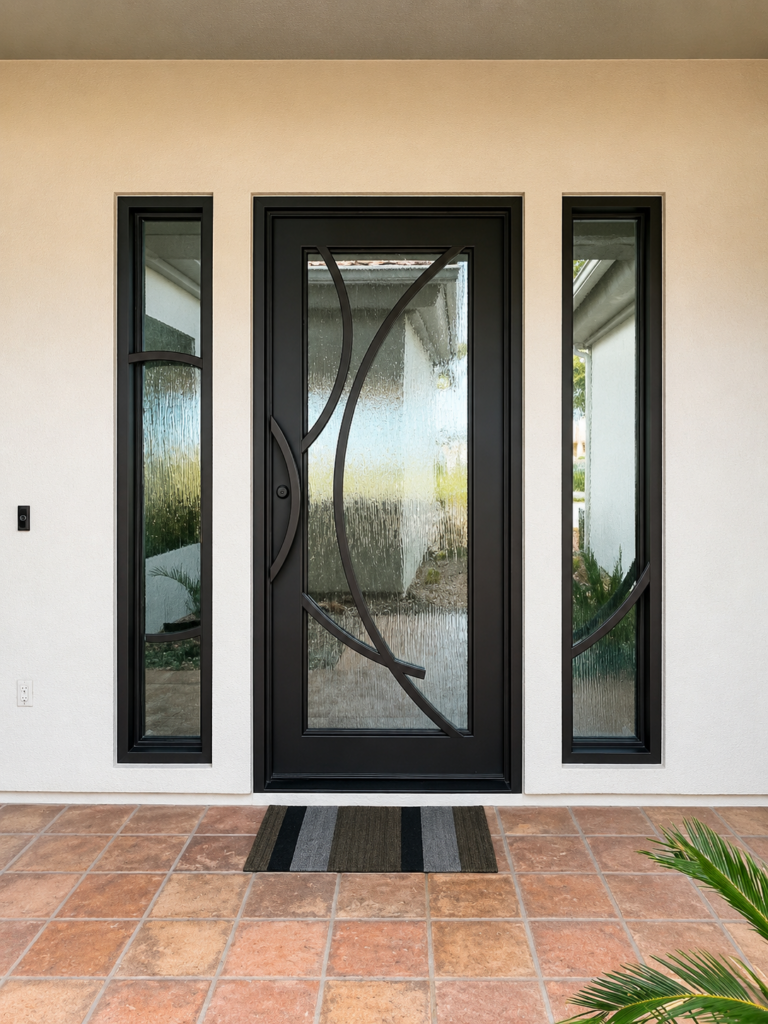
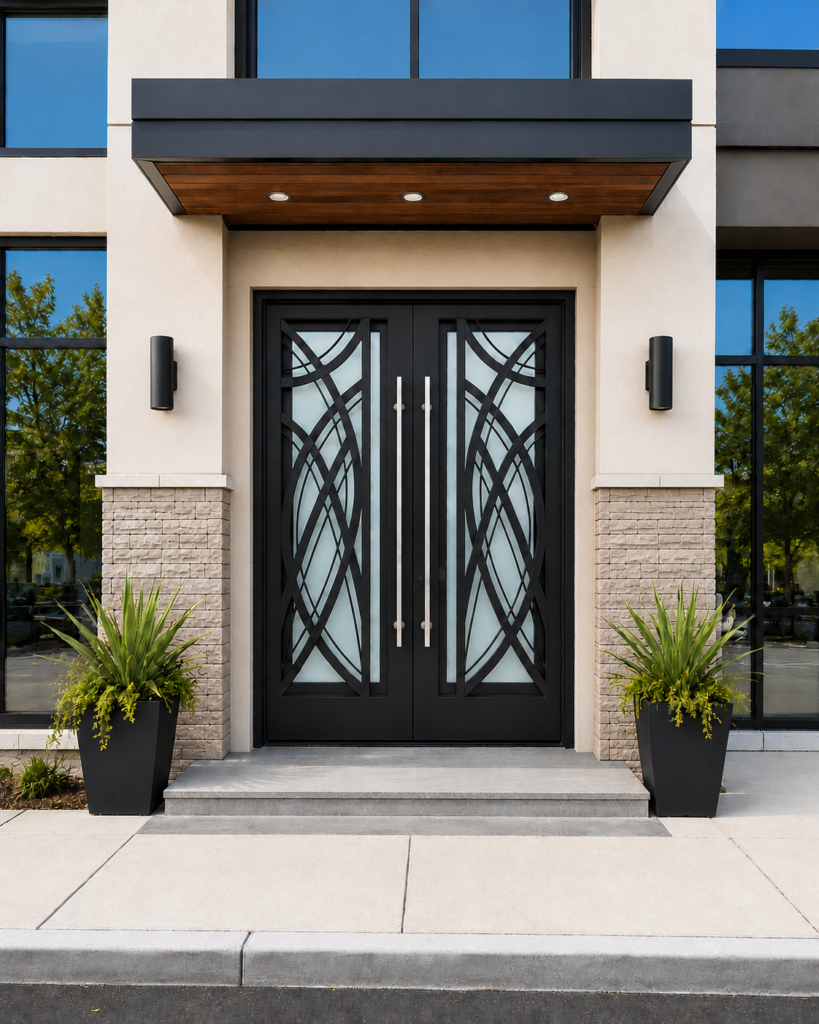
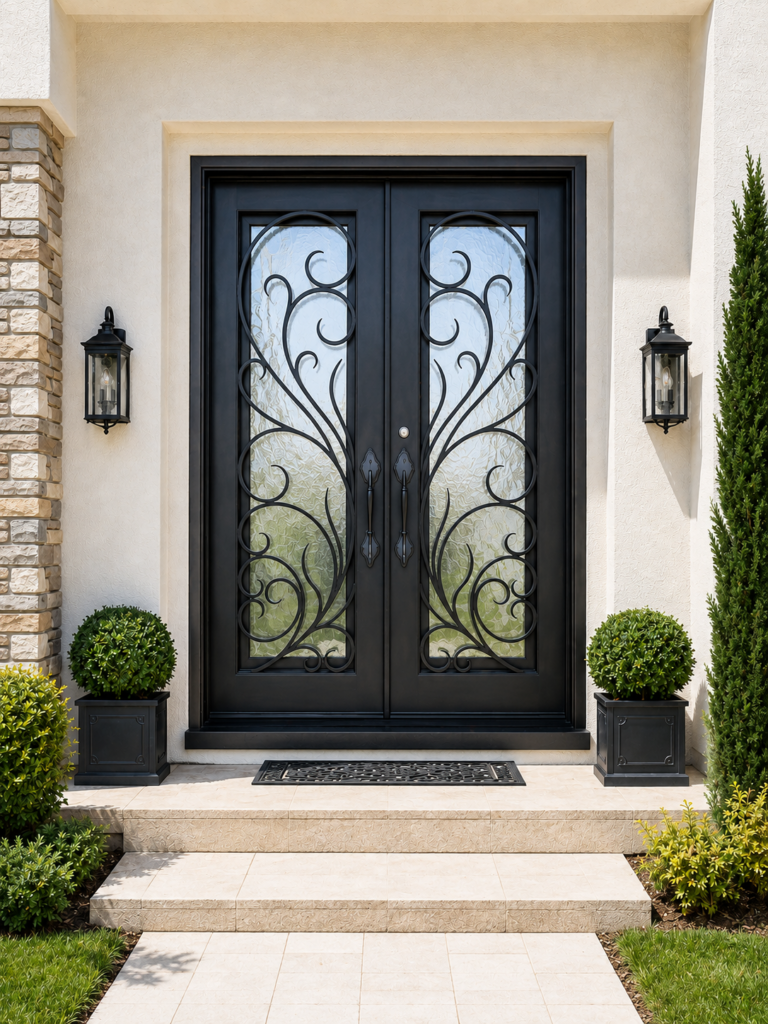
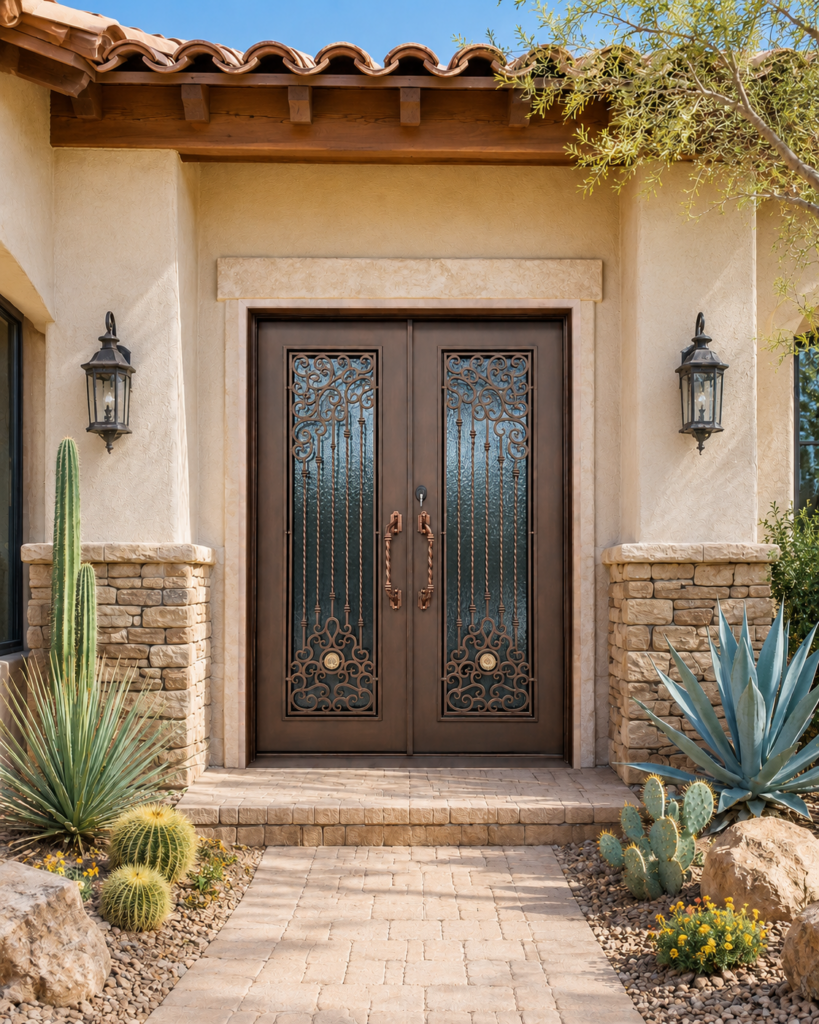
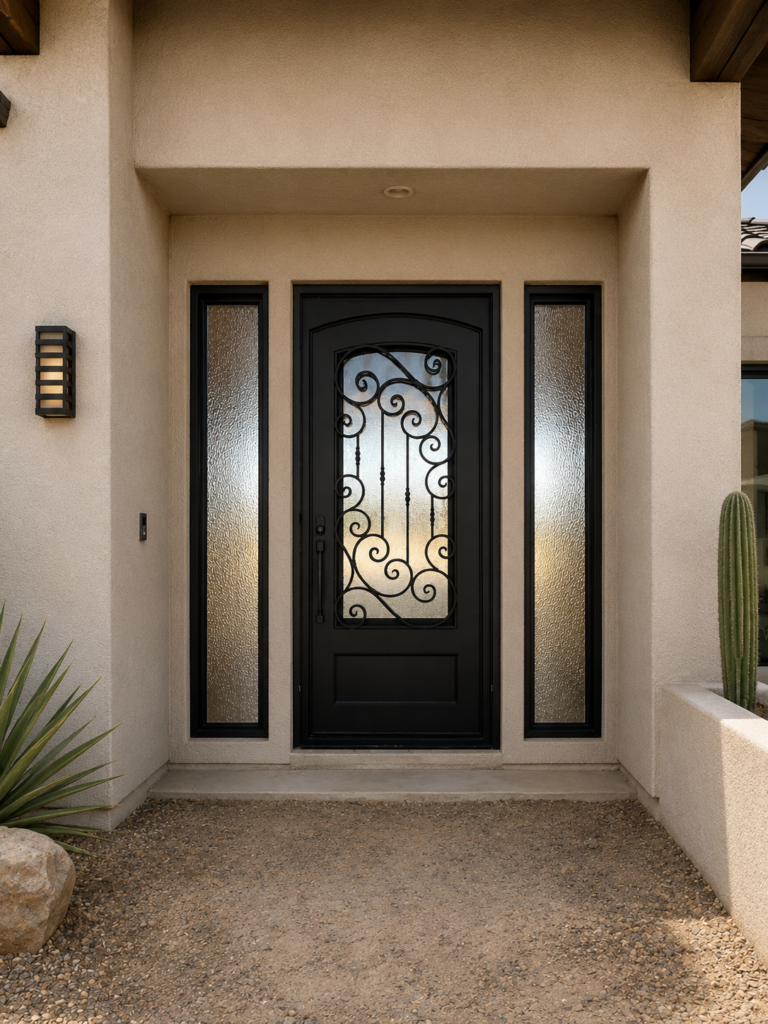
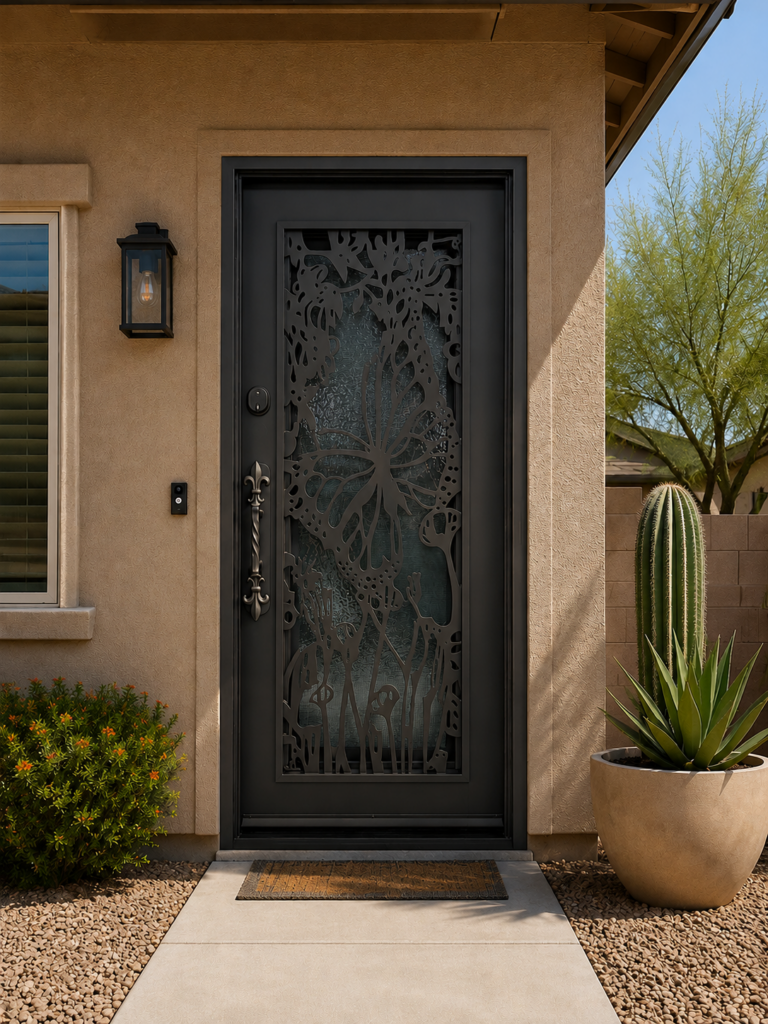
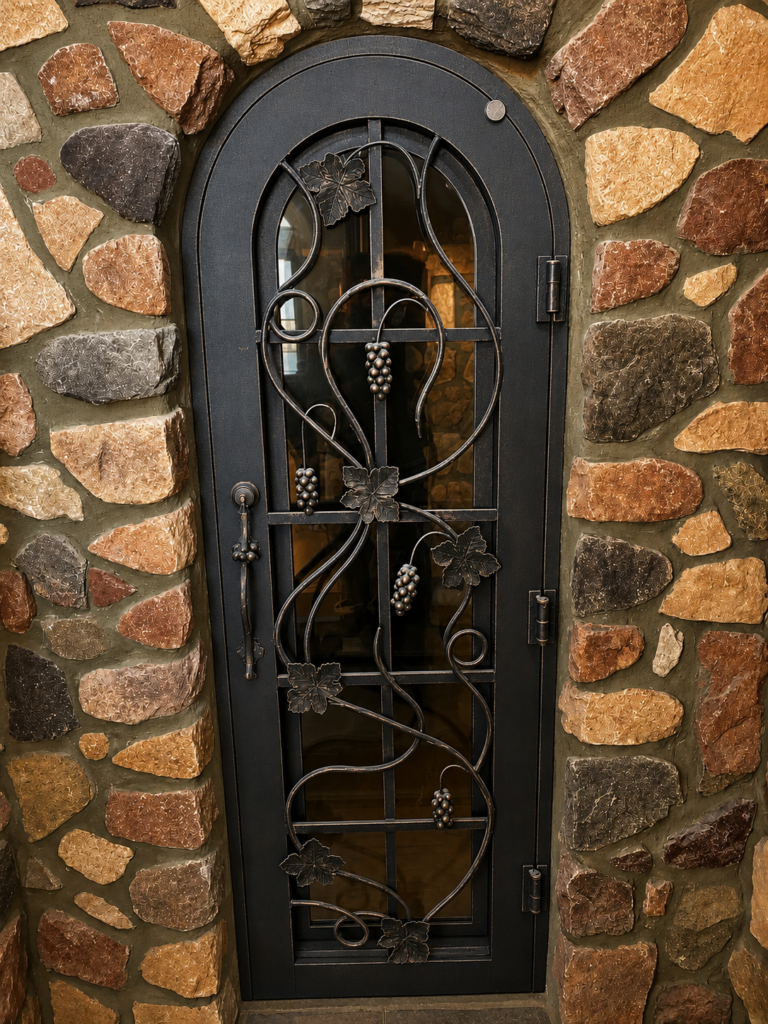
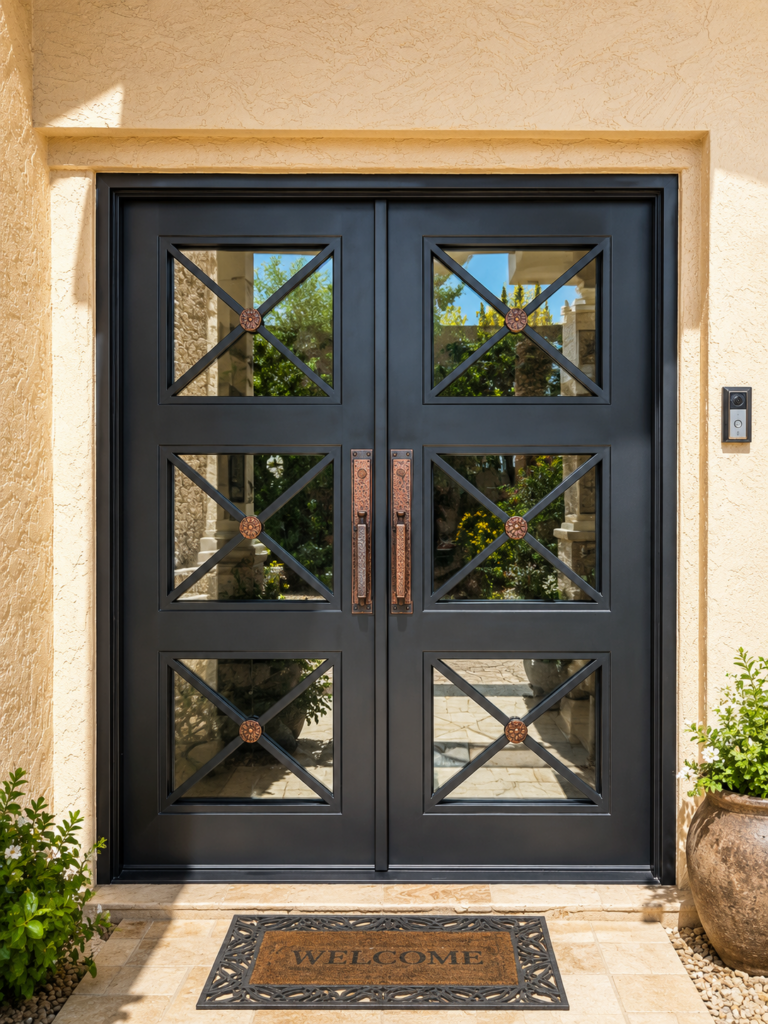
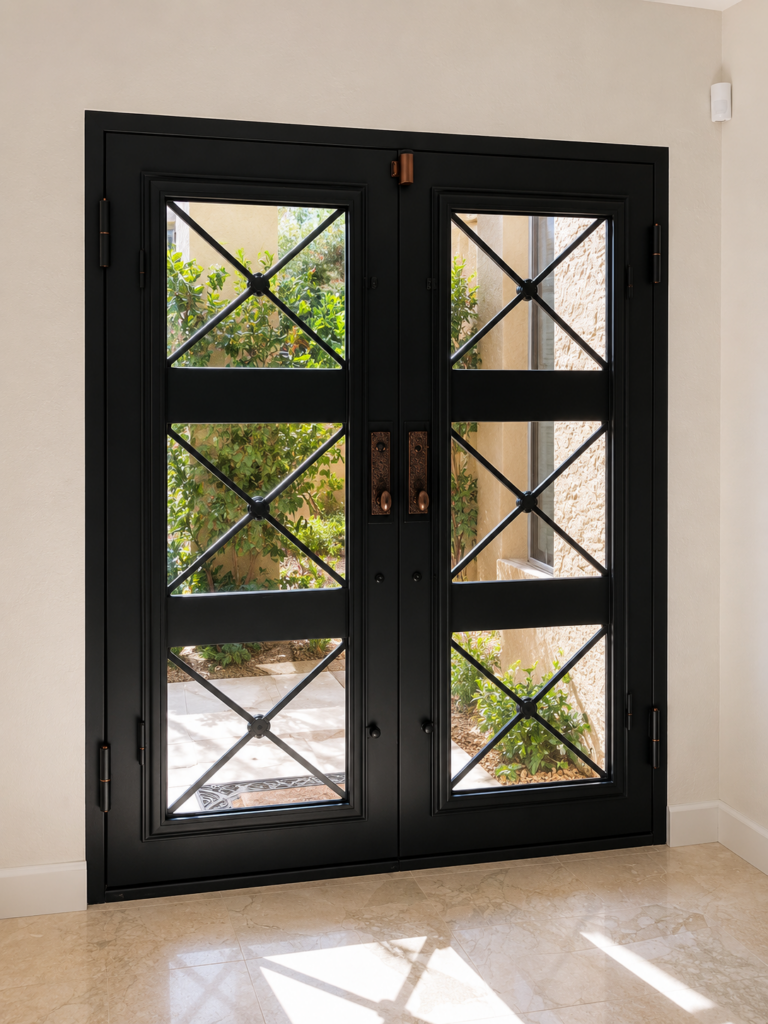
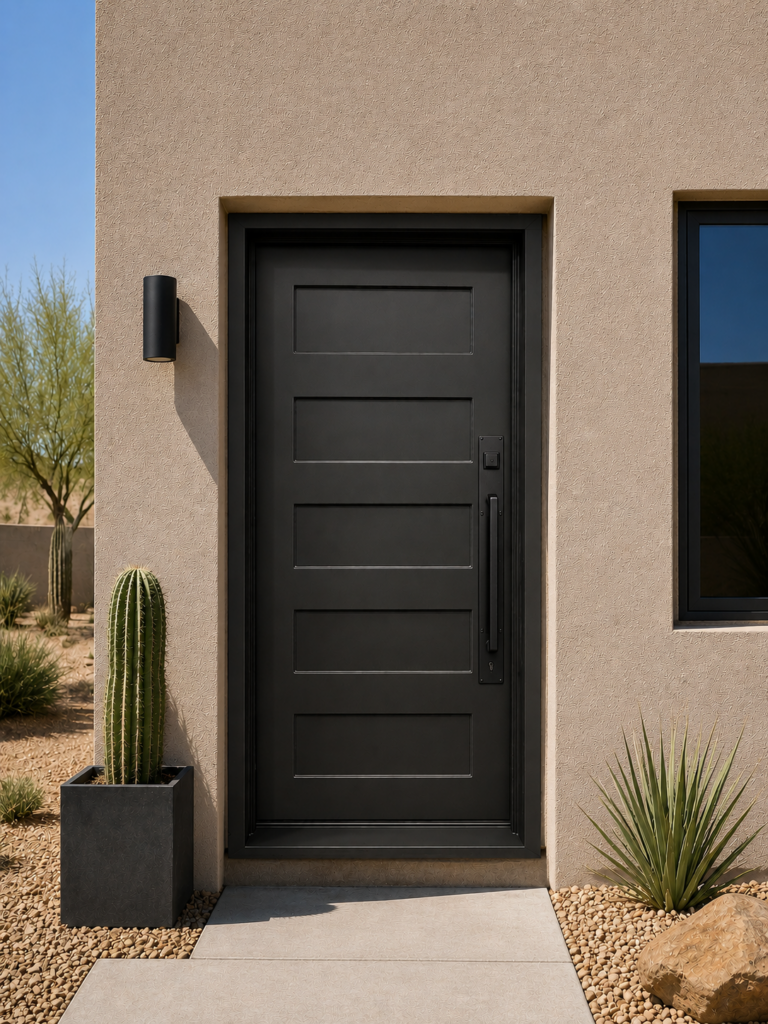
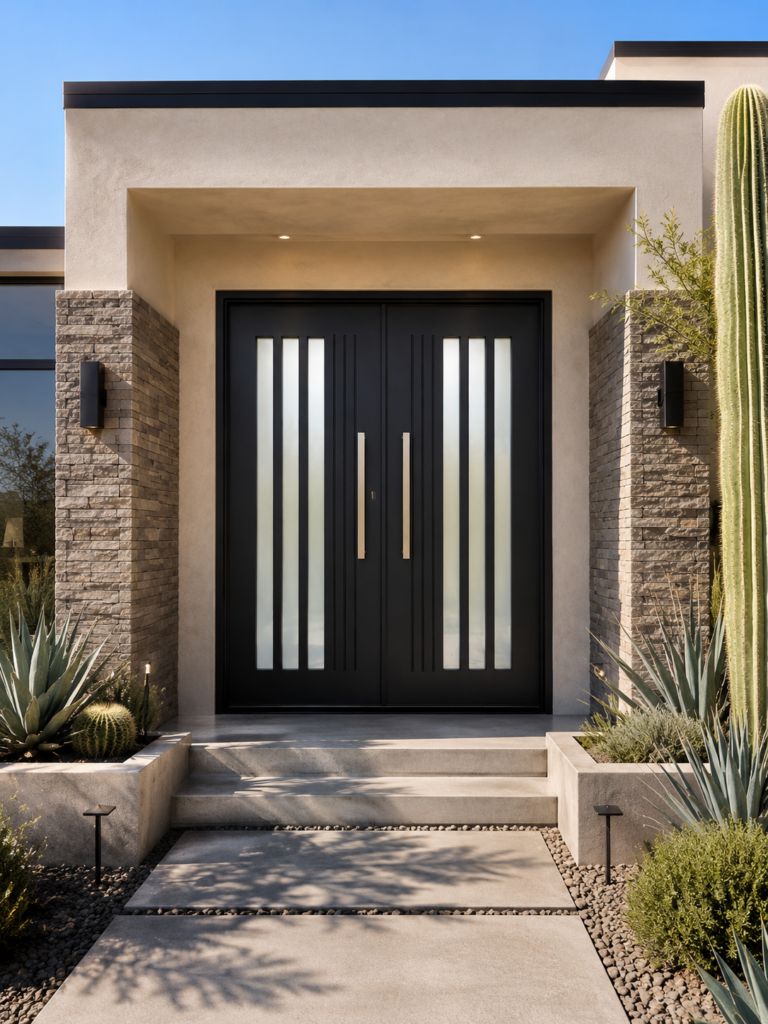
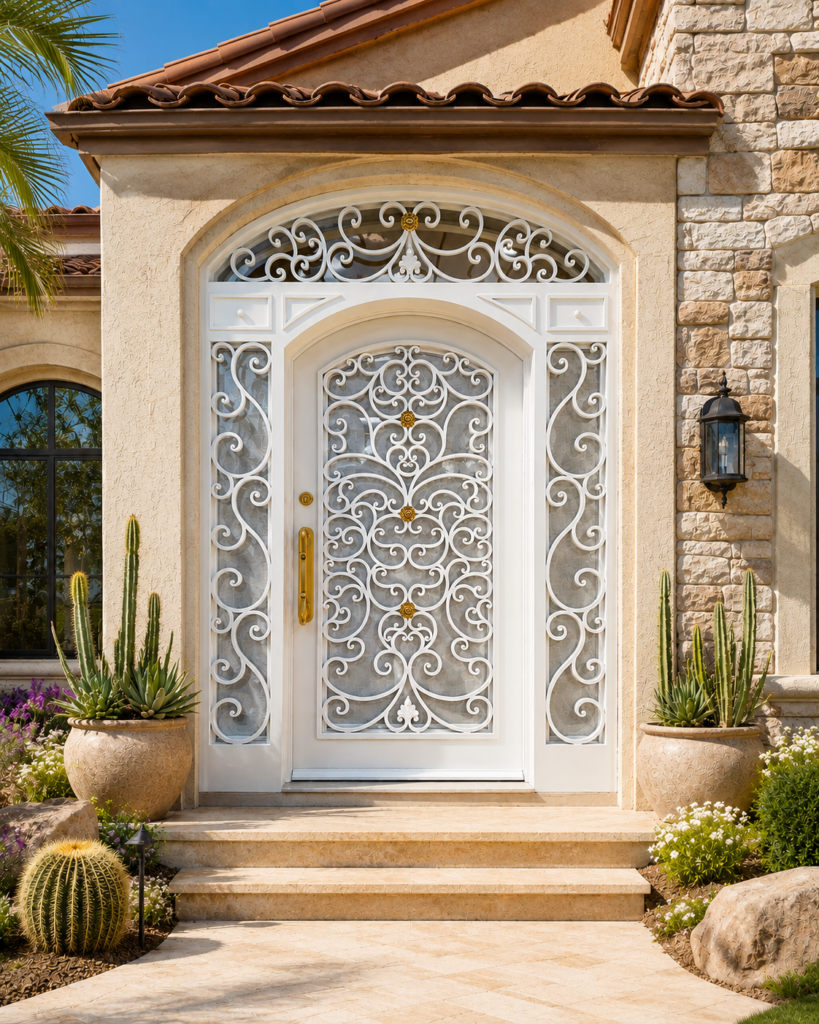
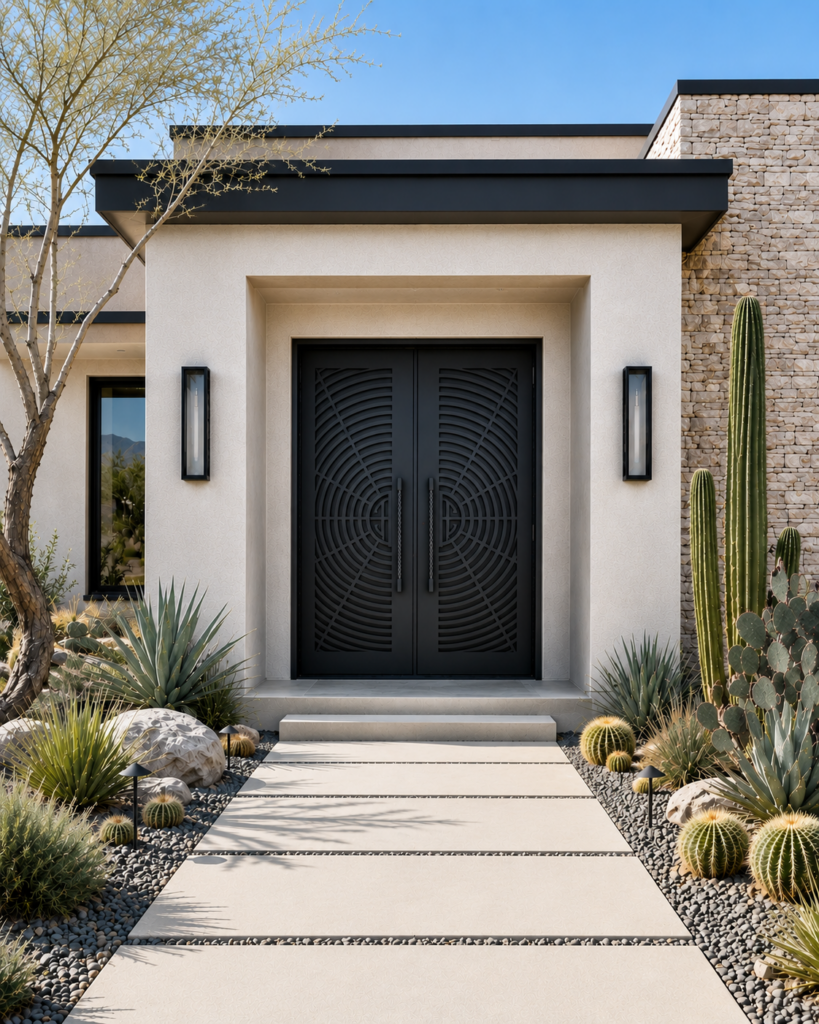
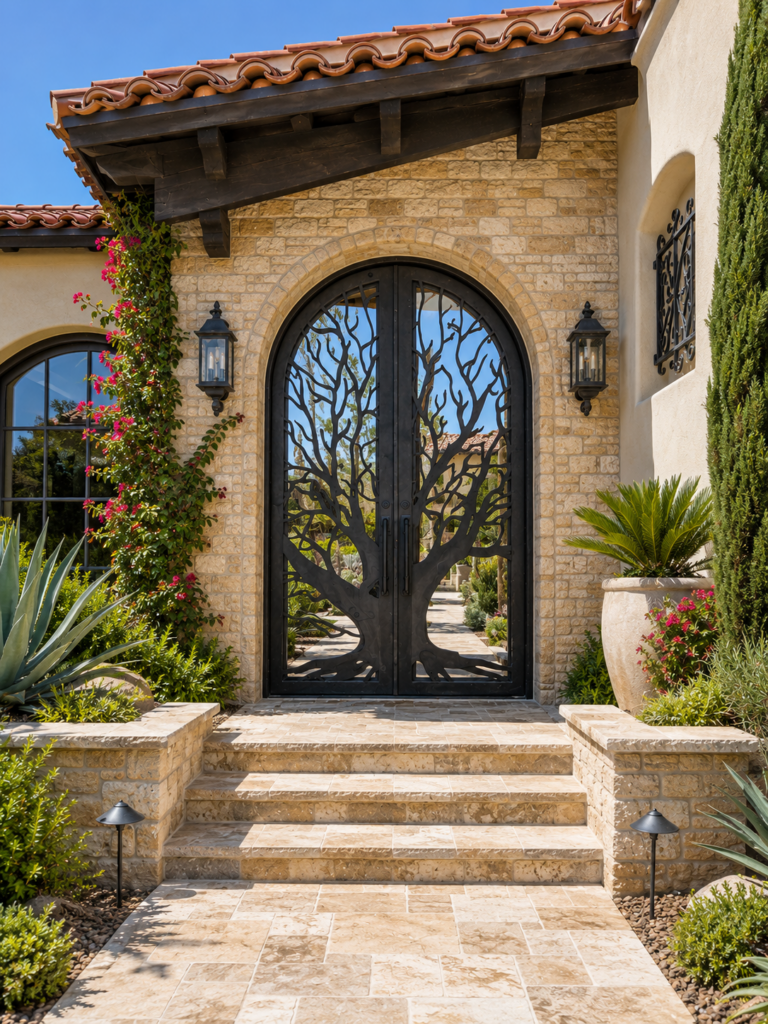
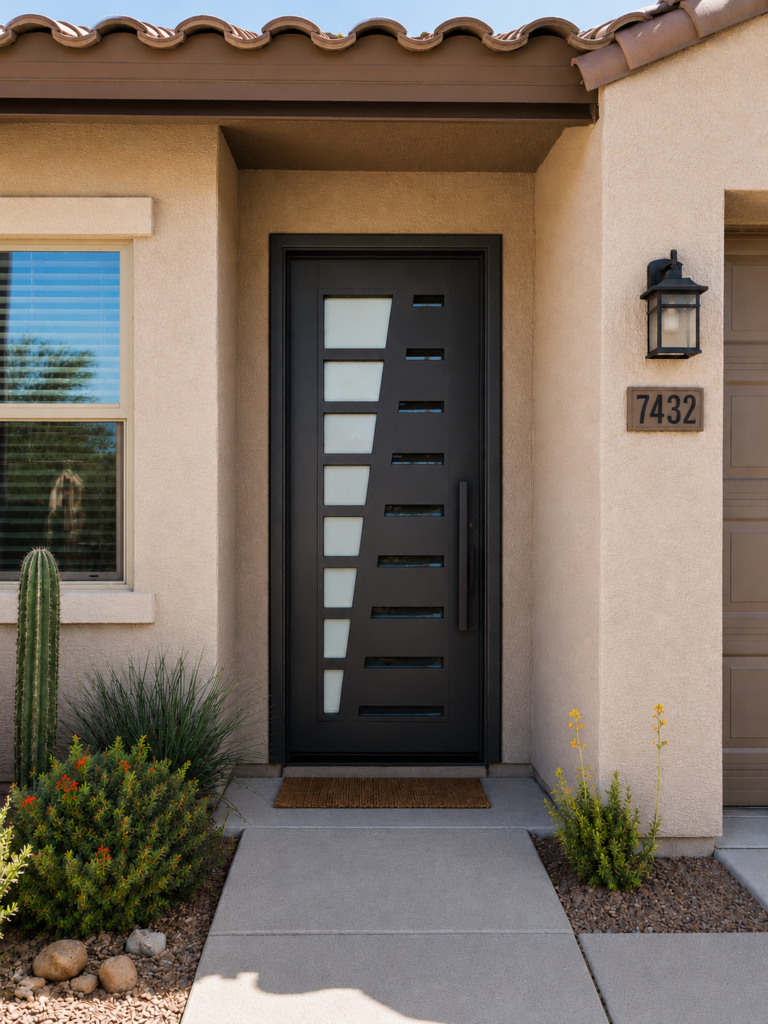
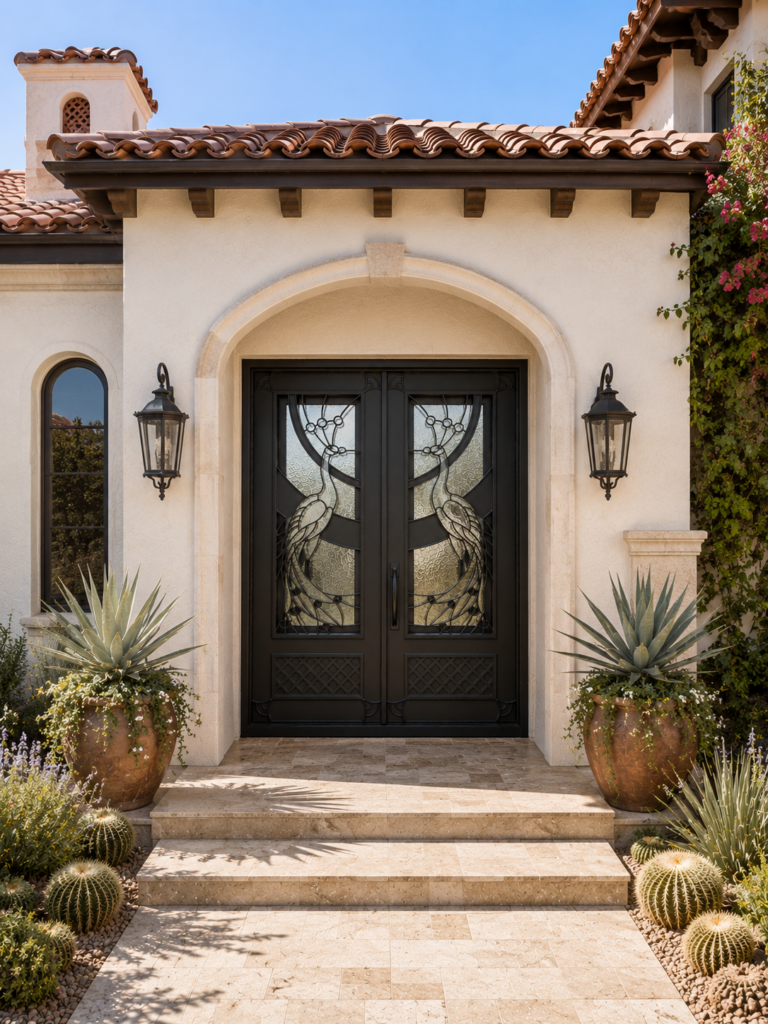
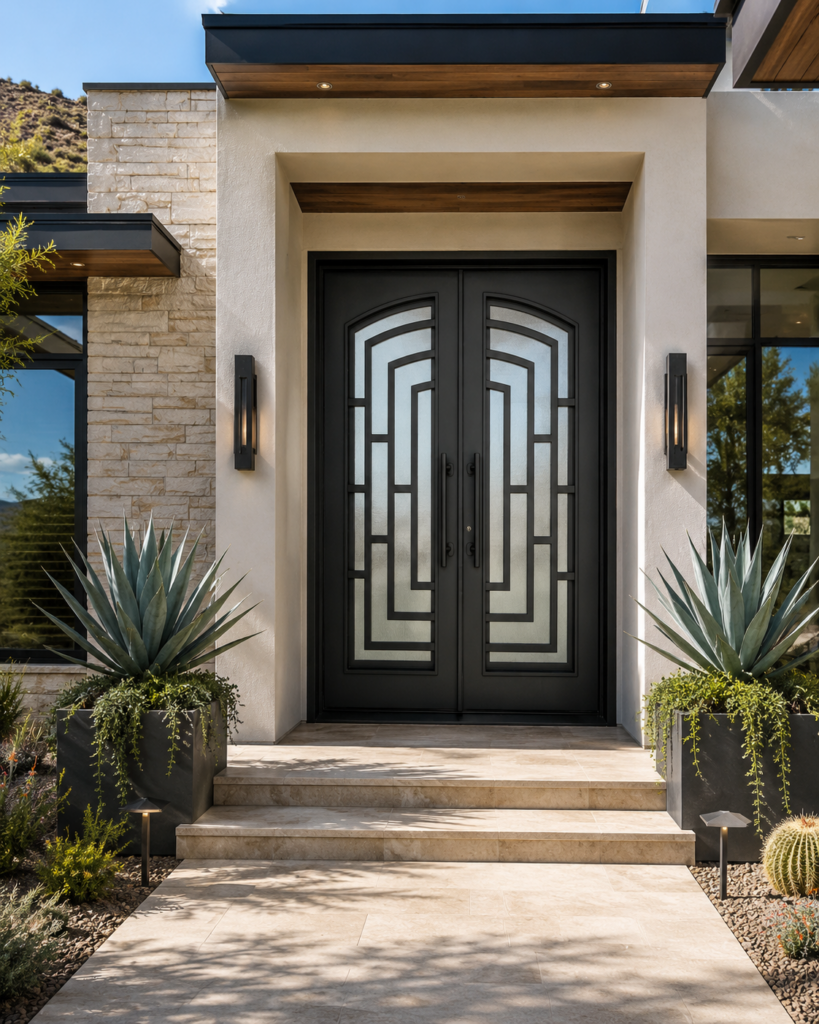
| Construction | Solid structural steel frames with hand-forged accents; weighs 200–400+ lbs. | Thin steel skin wrapped over a foam or polyurethane core. | Molded composite skin over an insulated core. | Solid wood planks or engineered wood cores. |
| Security | Unmatched; virtually impossible to breach or force open. | High; sturdy against impacts but vulnerable to sharp piercing. | Moderate; resilient but can crack under extreme, focused force. | Moderate; dependent on wood thickness and frame strength. |
| Thermal Efficiency | Poor; metal naturally transfers heat/cold unless explicitly built with a thermal break. | Good; insulated core keeps energy transfer relatively low. | Excellent; highly insulated and does not hold exterior temperatures. | Moderate; natural insulator but prone to air gaps if warped. |
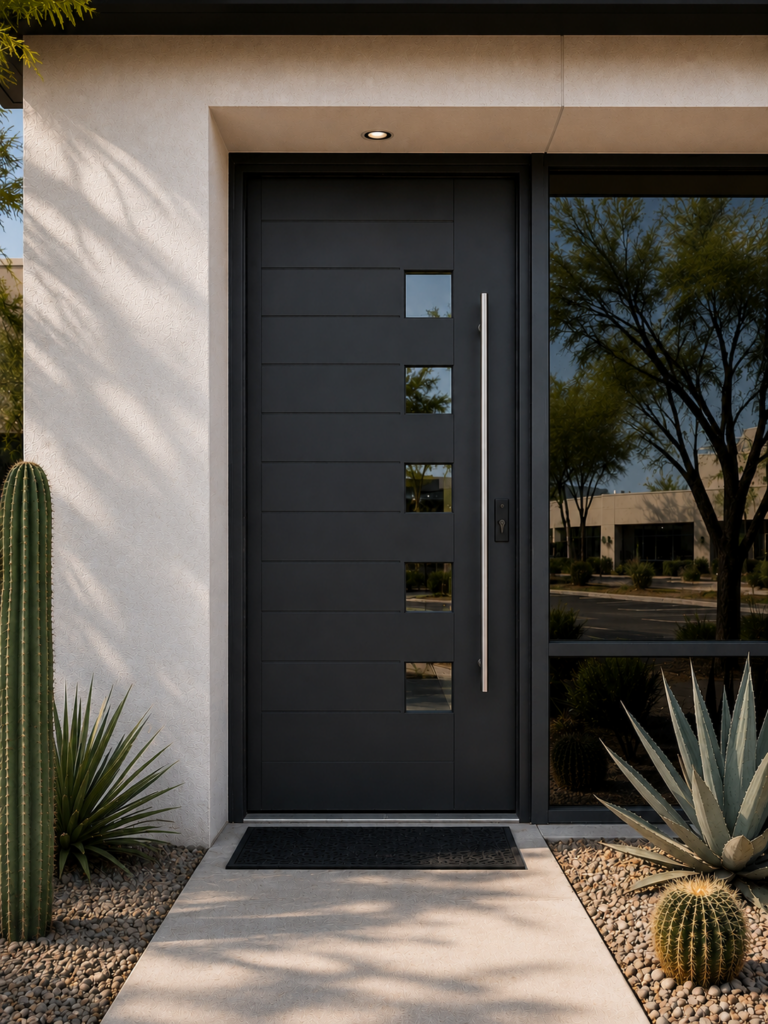
| Maintenance | Moderate; requires periodic sealing or paint touch-ups to prevent rust. | Low; needs rust-inhibiting paint but rarely warps. | Very Low; will not rot, rust, warp, or crack over time. | High; requires frequent sanding, staining, or painting to fight moisture. |
| Climate Best Fit | Moderate climates; requires heavy thermal protection in extreme cold/heat. | Most climates; can get hot to the touch in direct sunlight. | Ideal for harsh climates, intense sun, and coastal humidity. | Mild or covered entryways; suffers under heavy rain or intense desert sun. |